Wednesday, 27 August 2014

Is it OK to sell love letters?


Last week singer Marsha Hunt sold her 1969 love letters from Mick Jagger at Sotherby's for close to £200,000. Was she right to do so?

Anne de Courcy and Philip Norman
The Observer, Saturday 15 December 2012 18.04 GMT
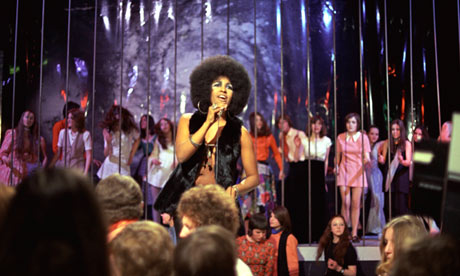
Marsha Hunt performing on Top of the Pops in 1970.

Anne de Courcy, writer, journalist and critic

American singer Marsha Hunt has sold the love letters written to her by Mick Jagger in 1969. They were the centrepiece of an English literature and history sale at Sotheby's – which also included Rolling Stones memorabilia. They fetched £187,250 – considerably more than the guide price of £70,000-£100,000. Hunt, then the "face" of the West End production of Hair, had an affair with Jagger at a time when his relationship with Marianne Faithfull was apparently under strain. Today Hunt is living in France, and has declared "I'm broke", adding that the reason she was selling the letters was because she had been unable to pay her bills. But should one ever sell love letters?

Letters – maybe. But love letters? No. Shortage of money is a powerful incentive, and the knowledge that you are sitting on something so potentially lucrative must be a huge temptation. Put it – or rather them – on the market and your troubles are over, at least for the time being. But love, whether past or present, is not only a private matter; more importantly, it is between two people – both of whom have the right to keep private feelings private. Hunt may feel happy about revealing the intimacies of past passion, but what about Jagger? Even someone who spends much of his life on a stage may not want his deepest feelings publicly displayed and for sale.


Philip Norman, novelist, biographer and journalist

Even acknowledging your general principle (which I don't), this is a very special case. Hunt began her affair with Jagger in 1969, before the era of scurrilous tabloids and fortunes to be made from kiss-and-tell. His letters to her were written in New South Wales, Australia, where he was starring in a biopic of the 19th-century outlaw Ned Kelly. Hunt did not cause his separation from Marianne Faithfull; it was Faithfull's descent into a spiral of heroin use, which ultimately almost killed her. By Hunt's account – never disputed by Jagger – he then told her he wanted to have a child with her. But when a baby daughter, Karis, was born in 1970, he denied paternity. It was eight years before a (US) court ordered him to pay proper child support. And never once did Hunt threaten to sell her story to the tabloids; in fact, she behaved with amazing dignity and restraint throughout. Her take from the Sotheby's sale is still a pittance compared with what modern ex-mistresses wring from megastars.

Anyway, these letters were hardly testaments of grand passion but chit-chat from the film set and about events such as the Isle of Wight pop festival and the moon landing. If they had been at all explosive, you can bet Jagger would have initiated legal moves to stop Hunt selling them (which he could, since they remain his copyright.) Far more revealing would have been his letters to his girlfriend Chrissie Shrimpton, whom he'd dumped for Faithfull. Years later, a (false) rumour reached him that Shrimpton intended to sell a cache of the letters. A legal sledgehammer came into play, and in terror she sent the whole lot back to him.

ADC: Clearly Hunt behaved very well over the affair, and the baby. But for me that doesn't alter the general principle (though I do wonder why if, as you say, these letters are simply "chit chat", they are called love letters) that everyone is entitled to privacy in their private lives. And that even if one of you doesn't mind revealing your half of an affair, the other half might.

Despite the let-it-all-hang-out philosophy today, I still believe this desire for privacy is a general human feeling – look at the outraged squalls of celebrities who have been outed in some amatory misdoing or other. And, look, we've just had the biggest-ever privacy debate in the shape of the Leveson inquiry. And it wasn't the delicacy and modest restraint of the press that was complained of by Hugh Grant et al.

In my biographies, I've often had to consider the question of highly personal letters – usually love letters. Even when the two people concerned have died, sons, daughters, brothers or sisters are often extraordinarily sensitive about the exposure of aspects of the subjects' lives.

Of course letters are the property of anyone they're sent to. But there's also very much a sense of "what I write is mine". Not for nothing is that enshrined in British law in the form of copyright.

PN: They were billed as "love letters", of course, to jack up the price at auction. Hunt later called them "laughing, sad, pensive, deep, observant and touching" but I'd describe them more as "like letters", for they do reveal the softer side of Mick. A specially sweet and supportive one reached Hunt to wish her luck when she played at the Isle of Wight pop festival. An exploding prop pistol had injured his right hand, so he wrote with his left.

Certainly, we all have a right to privacy – and most of us have interrupted enjoyment of it. I, for one, do not expect any of my former girlfriends ever to pitch up at Sotheby's with the gruesomely embarrassing love letters I wrote them. In one, I recall, some paroxysm of forgotten passion made me say I felt like "a leper". Unfortunately, that particular inamorata had a touch of word blindness. "Why did you say you felt like a leopard?" she asked me when we next met.

But we have to admit that celebrities – as F Scott Fitzgerald said of the rich – "are different from you and me". Some, indeed – Mick Jagger certainly among them – will end up in the history books, the quarry of historical biographers such as you, Anne. Is it only the death of the subject and all his family that legitimises publication of their intimate correspondence? Should there be a 50-year rule, as for classified state documents? And might there not be a great-great-great-nephew somewhere who still gets upset?

Anyway: get real. If we didn't want to give pain, why did we become writers?

ADC: Philip, am just wondering if you meant "uninterrupted" not "interrupted" in first line of your second par? I think you're arguing about the particular, Hunt and the "like letters" – as I must now learn to call them – while I'm talking of the general principle: whatever the circumstances, is it right to sell love letters while the writer is still alive?

And for me, I'm afraid it's still a clear, committed and instinctive "no". I didn't even have to think when asked that question.

I don't want to sound too heavy, but for me love is the most precious and powerful of the emotions, and getting rid of the words that express that bond, for cash, has something wrong about it – in a sense, it's almost like selling yourself. Even if the person concerned will one day be a historical character, doing so is still a kind of car-boot sale of the emotions.

I'm also sure that one reason why most of us would hate any love letter we wrote to be made public is not just the revelation of our most secret emotions and fantasies but, as you say, sheer embarrassment – think of the squirm-making language used by Edward VIII to Wallis Simpson. It beats "leper" any time – though I shall always think of you as a leopard.

PN: Yes, I meant "interrupted". How can I tax that old inamorata with word blindness? I have no problem with what you say about love. But, as the Everly Brothers sang, it's "so sad to watch good love go bad".

You can be pretty sure that when love letters go under the auctioneer's hammer, love on both sides has long since gone well and truly stinko. There is unlikely to be a still-bleeding heart to be pierced by arguments over the reserve price. Rather than "selling herself" by wringing this small pension payment from a multimillionaire rock star, Hunt may well feel that she "sold" herself in the first instance – and a sight too cheaply at that.

On a general point, I only said my squirm-making love letters were unworthy to enter the public domain. That certainly wasn't true of Edward VIII's to Wallis Simpson, which forensically expose the foibles of this fitting ancestor of Prince Charles. And in the even more squirm-making letters of Edith Thompson to her young lover Frederick Bywaters (written in mock-Irish brogue) are the makings of a famous 1920s murder and miscarriage of justice.

I like the idea of a car-boot sale of the emotions. Isn't it what we journalists do every day? Vengefulness may turn some spurned women into mercenary old boots. But leave Marsha Hunt out of that.

Taken from HERE.

Stop all the clocks...


This column will change your life: the unexamined life might be worth living

Sometimes it's best to stop all the clocks, switch off your phone and studiously avoid all mirrors.

Earlier this year, two American bloggers triggered a global media convulsion by embarking on what they called a "mirror fast": covering the mirrors in their homes, and shunning mirrors elsewhere, in an effort to reduce what one of them called "the overriding self-consciousness that's taken up residence in my psyche". Since the social pressure to conform to ideals of beauty falls mainly on women, I can only guess what it's like to be so aware of one's appearance: I assume it's related to what I feel whenever a badly-angled photo reminds me how astoundingly bald I am. But for the fasters, the experiment proved a liberation. "All the other interests in my life – my goals, passions, friends, family, favourite hobbies, etc – have attracted the energy and attention I used to give to my looks," wrote Kjerstin Gruys, while Autumn Whitefield-Madrano said she felt "calmer and more serene". They'd pulled off an ingenious psychological trick. In a world obsessed with appearances, it's impractical just to decide you're going to think differently. What they'd done, instead, was to deny themselves the feedback that fuelled the fixation.

Oliver Burkeman column 13/10/12 illo

Which is striking, because almost every other approach to health and happiness assumes the opposite: that more feedback is always good. The way to get fit, we're told, is to track miles jogged and weights lifted; to get slim, you track calories; and the first law of time management is to keep a detailed log, to see what you're really doing with your day. Reflecting an increasingly popular approach, the website moodscope.com uses mood-tracking to combat depression. There's an entire "personal informatics" movement, mentioned here previously, whose members use smartphones and other devices to turn their lives into data, so as to identify patterns and make improvements. (Join the fun at quantifiedself.com.) But mirror fasts are a reminder that more feedback isn't necessarily for the best.

In a parallel exercise last month, Steven Corona, a tech entrepreneur from South Carolina, "unsubscribed from the clock": "I dropped my watch right into the garbage. Shut off the glowing green-blue digital clocks that seem to piggyback on every appliance known to man..." He switched his iPhone to a random time zone (and did, he admits, continue to use its calendar to notify him of appointments). Much mockery followed: clock-fasting, critics rightly noted, wasn't an option for those who had to show up at an office by 9am daily. Still, as a compulsive watch-checker, I was inspired. After a few disorienting days, Corona says, his stress levels plummeted; he lost himself in projects, and learned to "read the sun". Insomniacs are advised to hide their clocks, because what doctors call "nocturnal time-monitoring behaviour" is relaxation's greatest foe. Corona simply took that principle to its conclusion.

You, of course, may have no hang-ups about mirrors or clocks. But it can be illuminating to ask if you've got other sources of feedback you might be better off without. Bathroom-scale readings? Bank-balance checking? All have their place. But all are also subject to the problem with personal feedback: once you've developed the habit of measuring something, it's hard to resist the conclusion that that thing matters. Maybe it doesn't. (And even if it does, maybe intuition would serve you better.) Sometimes, there may be data about ourselves we're better off not knowing.

Taken from HERE

Finding Ideas by Generating Questions


'Generating Questions' is a method you can think about using when producing a specific assignment, as one way of getting used to the process. Let's take a possible question from a first-year politics course as an example. I don’t necessarily expect you to know anything about the topic below from the point of view of a university politics course. The point of this method is to define your own thoughts as a preliminary to further work.


Imagine working on this title: ‘What is racism? Can it be eradicated?’

You would make a list of as many questions as you could that this title suggested to you. Of course, you would not be expected to answer any of these questions – just to pose them.
  • What do we mean by race?
  • What are the causes of racism?
  • Is racism mainly to do with black and white?
  • Is racism an innate human characteristic?
  • Are there some societies where racism doesn’t exist?
  • Are there different kinds of racism?
  • How has racism manifested itself historically?
  • Can anyone be racist?
  • What is the connection between racism and religious intolerance?
  • What effect have laws against racism had?
  • Is policy-making and the law an answer?
  • How am I personally affected by racism?
  • Is there a difference between racism and prejudice?
These questions are very varied and you will realize that neither this assignment nor even a fairly general politics course could answer all of them. They certainly do not begin to form a plan for an essay. It is also interesting that all of these questions could lead to further questioning, which is an important part of being able to be searching and analytical in your writing. It is always important that the student as well as the tutor asks questions.

Generate questions for yourself when you embark on a new course, and as you are about to read a book or article, or attend a lecture. Formulating the questions helps you to be clear about how you conceive the subject and what you hope you will get from the materials and other sources of information. It starts you thinking in a purposeful way as you explore different sources for ideas.

As you embark on your study you can expect to encounter various ways in which you will be helped towards tackling assignment questions. Firstly, your course syllabus or handbook should give you a good idea about how the particular topic of your chosen assignment fits into others.

Lecturers may also suggest appropriate ways in which you might think about the topics. Handouts may direct you to particular readings, or provide a series of different definitions. In discussion groups of various kinds you may be asked to introduce particular topics. This will give you the opportunity to explore your own understanding in the company of others who do not necessarily share your views.

You may find that you have to defend your opinions, or listen to others and change what you think on how you approach a topic. In all of this it is always a good idea to do your own thinking first, to put together and make concrete your ideas, see how they relate to what you are learning at university, and develop them by more thinking and reading.


Here is another example. The topic is "What is happening to the family in modern Indonesia"

Here are some questions (in no particular order) that could help a writer organize his or her thoughts:

  • What exactly is 'a family'?
  • Parents – parenting – should it be taught?
  • What is the impact of different cultures or traditions?
  • Are there different models of what is a family?
  • What ever happened to the extended family?
  • Is the nuclear family on its way out?
  • What do we know about the "Ideal family" in ‘TV ads’?
  • What are the new kinds of family emerging – e.g. shared parenting, civil partnerships.?
  • What about if families are difficult and can be completely dysfunctional?
  • Why is there a high rate of divorce?
  • Family Christmas – do I want it?
  • What does "family values" mean?
  • How and why do politicians talk about "family values"?
  • Are families in decline?

In Berlin, my home is your home


Tourists take photos of the Brandenburg Gate

Deutsche Welle CULTURE COLUMN 12th October 2012. HERE.

Berlin is poor but sexy, people say. So poor, that many inhabitants sublet their flats to tourists in order to pay their monthly rent. And so sexy, that everyone is crazy about taking the offer.
I though it was a joke when I first heard that a jobless friend of a friend had rented a tent on the sandy beaches at Tropical Islands - an amusement park just outside of Berlin - in order to sublet his flat for the entire winter. But it was true: The guy is still living there and enjoying the artificial balmy climate rather than the dreary Berlin drizzle - for only 59 euros ($76) a month. Meanwhile, his apartment is available for paying tourists who cover not just his rent, but also enough extra to make unemployment a comfortable lifestyle.

I still have a job, but I'll definitely keep this idea in mind for the day I get fed up with the Berlin winter.

It seems to be a global trend for people to sublet their apartments to tourists who'd rather not pay hotel prices. But in Berlin, this kind of business is becoming an alternative way of living.

Tents at the Berlin amusement park, Tropical Islands
At Tropical Islands, you can rent a tent and stay over night

The 'Mr. Right' apartment

There are numerous online platforms where people can advertise and rent out flats on a daily, weekly or monthly basis. "More value for your money," "More privacy," "Get to know the local lifestyle" - slogans like these attract millions of tourists to Berlin apartments.
They pay less and the tenant is happy to earn some extra money, often under the table. A win-win situation, plus home-made coffee, fresh bread from the local bakery and a washing machine.

That is, as long as the landlord doesn't know anything about it. And usually he doesn't, in a city where people move in and out like mad, constantly adjusting their apartment to their ever-changing lifestyle - smaller, bigger, cheaper, more luxurious. In Berlin, finding the perfect apartment is like finding the perfect partner: It can take years. And until then, you have to settle for short-term solutions.

Collateral damage

According to the Berlin Hotel Association (DEHOGA), there are between 15,000 and 25,000 holiday apartments in the city. But only 31 businesses, incorporating 2,729 beds, are legally registered.

Where, I wonder, are the other 10,000 odd Berliners are living? Probably at friends' places.

I should know better. I used to host a friend every now and then for a few weeks; she had lost her job and desperately needed to sublet her flat in downtown Berlin. She quickly created an ad with pictures for one of the many online platforms.
A piece of cake. The offers kept coming and, with the rental price of a few days, my friend could finance the rent for the whole month. Her two-bedroom flat with a balcony could house a whole family for 90-100 euros a day, so just over a week of subletting covered her monthly bill.

"There appears to be no rule against holiday renting in Berlin," I just read on 9fkats.com, one of the most popular flat rental websites at the moment.

There may be a bit a grey area between the lines, but if you want to stay on the legal side, you definitely have to ask your landlord for permission and register your business with the local tax authorities. Berliners, it seems, are much more willing to share with tourists than with the state.

Keeping everyone happy

Especially if they want to finance their own holidays this way. A good friend of mine moved to Berlin a few years ago and, as he says, often couldn't make ends meet. So when returned to the UK for a week or so, he would rent out his room.
"My rent was 250 euros a month," he told me, "and I would charge that much for a whole week. Everyone was happy." Most of his visitors fit into the 18-to-30-year-old backpacker category, from the US or other European countries.
Literally tens of thousands of Berliners are doing the same - to the dissatisfaction of some hotel owners who have started complaining about unfair competition. As Europe's third popular tourist destination after London and Paris, Berlin attracts about 10 million visitors a year, so I don't think the hotel industry is significantly endangered by the clandestine subletters.

A classy, free-standing bath tub
If you're lucky, a private sublet can be more luxurious than a hotel

Living in the holiday

Another trendy - and legal - way to make use of your home and save money for travel is the house exchange concept, like in the movie "The Holiday:" The character played by Kate Winslet exchanges her cottage near London for a luxury mansion in L.A. belonging to a movie trailer producer played by Cameron Diaz.

"Simply post information about your house swap offer including your preferred destination and dates. Once a match is made, it's up to you and your exchange partner to work out the details," according to homeexchangeplace.com. Members pay a yearly membership fee and can choose from thousands of homes all over the world - if they can find a match with someone who wants to stay in their place. But you could get lucky, like Winslet's character or a friend of mine, who once exchanged her flat in Berlin for a villa with pool in Mexico.

The trick, of course, is to live in a place where others go on holiday. Your cramped one-bedroom in exciting Berlin might be worth beach-front property in the Caribbean or, if not, at least an artificial blue lagoon for 59 euros a month. Basically all you need is Berlin and one of its many roofs above your head.

Troubled Teenagers

Some of you might find this interesting. Here are some questions put to an expert on the behaviour of "troubled teenagers" in Britain (he's called Charlie Taylor... I went to university with him!) Here are some of the questions. The names of the questioners are screen names from an online forum. What advice would you give to the parents who asked the following questions? His answers can be found at the link below.


Letter Q - Quicklookbusy: How do you approach 'encouraging' a teenager with college work? My daughter is 16 and just started her A-levels. She worked hard during the run-up to exams, but during the rest of the year, she had a very laidback approach - according to her teachers as well as me. She really wants to go to university but I know if she doesn't step up a few gears, this won't happen. Any attempt to ask about work is met with a grunt! Should I back off and just let her get on with it, even if it probably means she won't work to her full potential?

Letter Q - Bigtillymint: How do you deal with a hormonal (budding teenager) new year seven who is struggling at home to manage the demands of secondary school - wanting more independence and self-management, while still needing a lot of adult support with homework and so on? What do you do about 'teenage' tantrums and rudeness in tone of voice as well as what is said?

Letter Q - Nottirednow: If you really have very well-behaved, children don't you worry about them just a little bit? Is a bit of rebellion actually a good thing? Can you suggest a way to encourage a teen to speak out more in class? They are not lacking in ability but it's not going to help them get their choice of university.

Letter Q - Lovemygirls: My daughter is only 11 but has had an attitude problem for a few years now. I can mostly deal with it by saying firmly "I will not be spoken to in that tone" and refusing to cooperate with her if she won't cooperate with me, which usually sorts things out. But since she started secondary school, she is being very argumentative and is changing her views on a lot of things to try to fit in. How should you deal with children getting more freedom?

Letter Q - Pathfinder: I've got three teenage sons and I got divorced two years ago. I've struggled to establish a relationship as their divorced mother as they only stay with me at weekends. My eldest seems to be burying much of his emotions, energy and time in his online games and chatting online to pals. His school work has plummeted, but his dad doesn't seem worried and doesn't communicate with me.

I do have some ideas - a friend recently suggested I draw up a contract with my sons for when they stay with me, that would help me keep my house tidy and raise the topics of what we all consider acceptable and what not.

My eldest can get angry and agressive when I try to set bedtime and internet rules, but I know I need to do them - somehow - but how? He is far taller and stronger and angrier and louder than I am. Shouting isn't the answer.

Letter Q - Thesecondcoming: My teenager goes to bed after a perfectly nice evening with us and in a lovely mood, but wakes up like a banshee from hell and doesn't speak to any of us - including her two-year-old sister! Unless we're all going in in the night to piss her off then I really don't know where we're going wrong.
She sometimes seems so desperately unhappy and is really unpleasant to all of us. Then, for no reason, snaps out of it. I am finding it very difficult to access my loving feelings towards her sometimes. Is this normal? Or is it because we've had another baby?

Letter Q - Castille: I'd like to know how to re-teach my 13-year-old daughter some basic rules of courtesy and politeness. She drives me insane by pushing past people instead of letting them pass (like on the stairs or on to a bus), by not looking at someone who is talking to her and not greeting people properly. These are all things she once knew how to do!

Letter Q - Redpanda: My 15-year-old daughter has just turned to the dark side and I'm struggling to readjust and remind myself to zip it so I don't react and provoke further rudeness/"I know best" responses/sulks/silences/retorts/tears/etc (delete as appropriate). My current problem is how not to react to her 'boot face', which is becoming an increasingly familiar reaction when she doesn't like what I'm saying. It drives me mad!
If I have said "no" to a request that is unreasonable and explained why, then how do I cope with the inevitable sulks that will ensure, without getting wound up at her behaviour? My husband tells me not to take it all so personally, but the problem is that I do! I want my lovely girl back!

Letter Q - Musicopsy: My eldest, who is 14, despite being quite difficult when she was little, seems to be generally sailing through the teenage years with only the odd strop. We have a very close bond and get on well together. My youngest, 11, has up until now been the easiest child to raise you could imagine. But recently, she's stroppy and difficult. Virtually everything I ask her to do is met with, "What are you going to do about it if I don't?" It doesn't matter how reasonable the request.

It's not just with me, either. For example, she was told recently to take her feet off of the seat at the theatre. She knows she shouldn't have had her feet there in the first place, but she just said "why should I?" to the lady. It's like she has to challenge everything. I worry that I am getting closer to my eldest because she is easier. I don't want the bond with my youngest to slip away. But spending more time with my youngest just seems to give her more opportunity to be stroppy with me.

Letter Q - Stayingdavidtennantsgirl: My 13-year-old son has little or no empathy with others and has real difficulty controlling his temper at home - he has sworn at me, and the only effective sanction seems to be removal of his iPod. He can be so cold and nasty - and yet other times he is loving and cuddly.
Even the dog is scared of him - he says he hates her and wants nothing to do with her, and in the past, when he called her to go for a walk with him (after the stress of getting him to accept that it was his turn to walk her), she has run away and hidden under the desk.
I am looking into dyslexia as a possible cause for this defiant behaviour. Can you suggest anything that might help? I am literally at the end of my tether. I suffer from depression, and feel like a total failure as a mother.
 

What advice would YOU give to the parents above?

What answers do you think Charlie Taylor [the British expert] gave [either see below in the comments or go HERE]? Do you agree with his advice?

Do you think the advice to parents and analysis of teenager problems is affected by the culture in your country?

There are several more questions and answers to be found HERE.

Six Stages of the Essay Writing Process: 4

Stage Four: Drafting

One of the occupational diseases of writers is putting off the dreaded moment of actually starting to write. It’s natural to want to get it right first time, but that’s a big ask, so naturally you put it off some more. However, unless you’re sitting for an exam, you can do as many drafts as you need to get it right. (Some of us do quite a number: my last novel was up to draft 24 when I gave it to the publishers.) First drafts are the ones writers burn so no one can ever know how bad they were.

Only a first draft

Redrafting can seem like a chore, but you could also see it as a freedom. It means that this first draft can be as rough and ‘wrong’ as you like. It can also be (within reason) any length. In Step Five you’ll add or cut as you need to, to make it the right length, so you don’t need to worry about length at the moment. Writing is hard if you’re thinking, ‘Now I am writing my piece.’ That’s enough to give anyone the cold horrors. It’s a lot easier if you think, ‘Now I am writing a first draft of paragraph one. Now I am writing a first draft of paragraph two.’ Anything you can do to make a first draft not feel like the final draft will help. Writing by hand might make it easier to write those first, foolish sentences. Promising yourself that you’re not going to show this draft to a single living soul can help, too. But the very best trick I know to get going with a first draft is this: Don’t start at the beginning.

The GOS factor

The reason for this is the GOS factor. This is the knowledge that our piece has to have a Great Opening Sentence—one that will grip the reader from the very first moment. Probably the hardest sentence in any piece of writing is the first one (the next hardest is the GFS—the final one). Starting with the hardest sentence—the one with the biggest expectations riding on it—is enough to give you writer’s block before you’ve written a word. Years of my life were wasted staring at pieces of paper, trying to think of a GOS. These days, instead of agonising about that GOS, I just jot down a one-line summary to start with. I don’t even think about the GOS until I’ve written the whole piece. In Step Five (page 139) there’s some information about how you might write a GOS—but you don’t need it yet. No matter where you start and whatever the piece is about, you need to decide how the piece should be written—the best style for its purposes. Let’s take a minute to look into this idea of style.

About style

Style is a loose sort of concept that’s about how something is written rather than what is written. Choosing the best style for your piece is like deciding what to wear. You probably wouldn’t go to the school formal in your trackies and trainers, and it’s not likely you’d go to the gym in your silk and satin. In the same way, you wouldn’t use the same language for every situation. It all depends on what the piece of writing is for.

Choosing an appropriate style

For an essay, you’re trying to persuade or inform your reader. Therefore, you’ll want to choose a style that makes it as persuasive or informative as possible. You want to sound as if you know what you’re talking about, and that you have a considered, logical view of the assignment rather than an emotional response. Even for an essay in which you’re taking sides and putting forward an argument, you’ll be basing it on logic, not emotion.

This sense of your authority is best achieved by a fairly formal and impersonal style. You would probably choose:

  • reasonably formal words (not pompous ones, though);
  • no slang or colloquial words;
  • no highly emotional or prejudiced language;
  • third-person or passive voice (no ‘I’);
  • sentences that are grammatically correct and not overly simple (but not overly tangled, either).

In a first draft, aim for these features if you can, but don’t get paralysed by them. It’s better to go back and fix them up later (Step Six shows you how) than not to be able to write a first draft at all because you’re too worried about getting it perfect.


You can see from this that style boils down to three factors: word choice, voice and sentence structure. We’ll look at each of those one by one.

Choice of words

English is well-supplied with synonyms—different words that mean the same thing. They may mean the same, but you’d choose different ones for different purposes.

  • The average kitchen contains quite a few cockroaches.
  • The average kitchen contains heaps of cockroaches.
  • The average kitchen contains numerous cockroaches.

If you were aiming to be convincing, factual and authoritative, you’d probably use ‘numerous’. If you were aiming to be chatty and friendly, you might choose ‘heaps’. If you were aiming for somewhere in between, you might use ‘quite a few’. Whichever one you choose is a matter of judging which one will serve your purposes best. That means thinking about the purpose of your piece and who will be reading it.

Voice

Listen to the following sentences. Who’s speaking in each one?

  • I hate all kinds of bugs.

This sounds personal and close up, like a person talking directly to you. It’s called the first person narrator because an ‘I’ is speaking.

  • You (reader) hate all kinds of bugs.

This narrator is telling you about yourself. This is the second person because the narrator is speaking to a second person, ‘you’. Sometimes the ‘you’ is not actually said, but it’s there in the background, and then it sounds as if the ‘you’ is being given an order. For example, ‘Sit down’—the ‘you’ is there but not actually said. This is called the imperative (meaning ‘what you must do’).

  • He [or she] hates all kinds of bugs.

This narrator is talking about other people. It’s a sort of ‘onlooker’. This is the third person (it’s talking about things happening to a third person—a ‘he’ or a ‘she’).

  • One hates all kinds of bugs.

This is when you’re talking about yourself, but in a disguised way—you’re speaking about yourself as if you’re a third person— you want to stay hidden behind a third person’s mask.
This can also be used to show that you’re speaking about people in general—to give the idea that it’s a universal truth—for example, ‘To make an omelette, one must break eggs.’

Sometimes we use ‘you’ as a more informal version of this ‘universal’ narrator, so it doesn’t sound quite so pompous—for example, ‘To make an omelette, you must break eggs.’

  • Bugs are hated.

This sentence doesn’t tell us who hates bugs; someone does but the narrator has not told us. The narrator has rearranged the words so that bugs are the subject and focus of attention in the sentence. This is called the passive voice. Computer grammar checks seem to hate the passive voice, but it has its uses. It has a certain authority. It also allows the writer to hide information from the reader—in the example above, we aren’t told who hates bugs.

You can see from these examples that the choice you make will have a big effect on the way readers respond.

  • If you want your readers to be charmed, to feel relaxed, to like you, you’d probably use the personal, chatty, first-person ‘I’ narrator. You might use the personal voice in a letter or for a piece of imaginative writing, for example.
  • If you want them to be convinced by you and believe what you’re saying, you’d choose a less personal narrator with more authority—the third person. You would probably use third person in an essay or a report because of its confident and objective feel.
  • If you want to shift the emphasis of the sentence away from the person acting, or to the action itself, you might use the passive voice. For example, in a scientific report you might say, ‘A test tube was taken’ or ‘Four families were interviewed’.

Sentence structure or syntax

Syntax just means the way you put your words together to make sentences. The simplest kind of sentence has a grammatical subject, a verb and an object: ‘I (subject) hate (verb) bugs (object).’ This arrangement can be varied. Sometimes you want to do something more elaborate like adding clauses and phrases, or changing the usual order of words. My house is full of bugs, which I hate. Bugs! I hate them. I hate bugs, although my house is full of them. Although my house is full of bugs, I hate them; however ants are different—I find them rather cute. at the
How to decide on the best style for your piece

Okay—so you can make a piece sound different depending on what style you choose. But how do you know what style is right for a particular piece of writing? The answer is to go back and look again at what your piece of writing is trying to do.

If a piece of writing is mainly setting out to entertain, you need to ask what style will be most entertaining for this particular piece.

If a piece of writing is setting out to persuade, you need to ask what style will be most persuasive.

If you’re setting out to inform, you need to ask what style will be best to convey information.


So, work out what your piece of writing is trying to do, then choose the best style for that purpose and write in it.

What if I can only think of one style?

Writing in different styles for different purposes assumes that you can choose between several ways of saying something. It assumes, for example, that you can think of another word for ‘heaps’ if you’re writing an essay. But maybe you can’t think of another way to say it.
One solution is to go to a thesaurus and try to find a similar word. This is okay in theory but the thesaurus won’t tell you whether the word you find is going to fit with the tone of your piece. It doesn’t know what kind of piece you’re writing.

A different way is to use the actor all of us have inside ourselves. Try this: if you can only think of ‘heaps’, and you know it’s too slangy for your essay, pretend you’re a school principal or the prime minister and say your sentence in the tone of voice and words you’d imagine them using. If you can only think of ‘numerous’, but you want your piece to sound relaxed and chatty, try pretending you’re on the phone to your best friend and say the sentence in the sort of words you’d probably use to him or her.

Using your outline

As you write, you might see ways to improve or add to your outline. Change it, but make sure it’s still addressing the assignment and moving in a logical way from point to point. Don’t let yourself be drawn down paths that aren’t relevant to the assignment.

Keeping the flow going

Postpone that intimidating GOS—Great Opening Sentence. Instead, use the one-line summary of your basic idea that you put at the head of your outline in Step Three. This sentence won’t appear in the final essay—it’s probably pretty dull. You’ll think of a more interesting way to start the essay in Step Five. Plunge in and try not to stop until you’ve roughed-out the whole piece. If you can’t think of the right word, put any word you can think of that is close to what you want to convey. If you’re desperate, you can always leave a blank. If you’ve forgotten a date or a name, leave a blank and come back to it later. Get spelling and grammar right if you can—but don’t let those things stop you. Don’t go back and fix things. Rough the whole thing out now and fix the details later.

Getting stuck

The Beginning of an essay is often a hard place to start. It’s where the central issue of the essay is presented—whether it’s a body of information about a subject, or a particular argument. Sometimes it’s hard to write this before you’ve written the whole piece. If you’re finding this is the case, write the Middle first. Come back later when you can see what you’ve done and tackle the Beginning. (In “Stage Five – Revising”, next week, there’s some information about getting that GOS right, but you don’t actually need it now.)

How to end it

Ending an essay can be almost as hard as starting it. The pressure is on for that Great Final Sentence to be—well—great. Take the pressure off for now. Just draw together the points you’ve made in the best final paragraph you can. You’ll probably need more than one try before you get it exactly right—don’t spend too much time on it now. (Step Five is the time for that.)Don’t give this to a reader yet. It’s rough, and they might not be able to see past the roughness to the shape underneath. Revise it first (Step Five), otherwise you might be unnecessarily discouraged.

First Draft For an Essay: 7 steps

1. Remind yourself of the ‘essay style’
Aim to use:
  • formal, non-slangy words;
  • third person or, for certain kinds of essays, passive voice;
  • grammatically correct sentences that aren’t too simplistic.

2. Write out each card on your outline
  • Start with your one-line summary of the piece. (But remember it won’t appear like this in the final draft—this is just to give you a run-up. When you’ve written the essay out, you can come back and think of a better way to start it.)
  • The idea is to expand each card into a paragraph (or several paragraphs).
  • In general, each card should be a new paragraph (this might not be true of the Beginning and End sections).

3. Structure each paragraph
Use:
  • • a topic sentence which says what the paragraph will be about;
  • • a development which gives more details, in a few sentences;
  • • evidence which gives examples or other supporting material.

4. Link each paragraph to the assignment
Ask yourself:
  • How does this help to address the assignment I’ve been given?
  • How can I show that it addresses the assignment?
  • How can I connect this paragraph to the one before?

5. What if you can’t think of how to expand on a card?
Ask yourself:
  • Should this idea be in the essay after all?
  • Do I need to find out some more information? If so, more research might give you what you need.
  • Does this point need some support or proof? If so, go and look for some. If you can’t find anything, consider whether you should still include that point.

6. What if you get stuck?
Ask yourself:
  • Am I feeling anxious because this doesn’t sound like an essay?
  • >>> (Solution: it’s not an essay yet. It’s only a first draft. Give it time.)
  • Am I having trouble thinking of the right word or right spelling?
  • >>> (Solution: for the moment, just find the best approximation you can. Fix it up later.)
  • Am I stuck because I’ve forgotten a date or name or technical term?
  • >>> (Solution: leave a blank and look it up when you’ve finished writing this draft.)
  • Am I stuck because my sentence has become long and tangled up in itself?
  • >>> (Solution: cut the sentence up into several short, simpler ones.)
  • Do I keep going back and re-reading what I’ve done?
  • >>> (Solution: just press ahead and get it all down before you go back.)
  • Is there another card further down the outline that would be easier to write about?
  • >>> (Solution: leapfrog down to that card. Start the writing for it on a new page, though, and don’t forget to go back later and fill in the gap.)
  • Do I keep losing sight of how each idea is relevant?
  • >>> (Solution: use key words from the assignment in each topic sentence.)

7. What if the essay changes direction?
  • This is common, so don’t panic—although a well-planned outline help prevent it.
  • Once you can see the new direction, stop writing and go back assignment. Would this new direction be a better way to the assignment after all?
  • If you think so, go back to the index cards. Add new ones for ideas, cut out any that no longer fit, and rearrange the rest need to.
  • Resume writing using the new outline and remind yourself more time outlining the next time you write an essay.


IN THIS SERIES ABOUT THE ESSAY WRITING PROCESS:

Previously… Stage One: Getting Ideas > Stage Two: Choosing Ideas > Step Three: Outling

To follow… Step Five: Revising > Step Six: Editing

Writing Strategy and Style

Purpose, the end you are aiming at, determines strategy and style. Strategy involves choice—selecting particular aspects of a topic to develop, deciding how to organize them, choosing this word rather than that, constructing various types of sentences, building paragraphs. Style is the result of strategy, the language that makes the strategy work.

Think of purpose, strategy, and style in terms of increasing abstractness. Style is immediate and obvious. It exists in the writing itself; it is the sum of the actual words, sentences, paragraphs. Strategy is more abstract, felt beneath the words as the immediate ends they serve. Purpose is even deeper, supporting strategy and involving not only what you write about but how you affect readers.

A brief example will clarify these overlapping concepts. It was written by a college student in a fifteen-minute classroom exercise. The several topics from which the students could choose were stated broadly—"marriage," "parents," "teachers," and so on—so that each writer had to think about restricting and organizing his or her composition. This student chose "marriage":

Why get married? Or if you are modern, why live together? Answer: Insecurity. "Man needs woman; woman needs man." However, this cliche fails to explain need. How do you need someone of the opposite sex? Sexually is an insufficient explanation. Other animals do not stay with a mate for more than one season; some not even that long. Companionship, although a better answer, is also an incomplete explanation. We all have several friends. Why make one friend so significant that he at least partially excludes the others? Because we want to "join our lives." But this desire for joining is far from "romantic"—it is selfish. We want someone to share our lives in order that we do not have to endure hardships alone. [125 words]

The writer's purpose is not so much to tell us of what she thinks about marriage as to convince us that what she thinks is true. Her purpose, then, is persuasive, and it leads to particular strategies both of organization and of sentence style. Her organization is a refinement of a conventional question/ answer strategy: a basic question ("Why get married?"); an initial, inadequate answer ("Insecurity"); a more precise question ("How do we need someone?"); a partial answer ("sex"); then a second partial answer ("companionship"); a final, more precise question ("Why make one friend so significant?"); and a concluding answer ("so that we do not have to endure hardships alone").

The persuasive purpose is also reflected in the writer's strategy of short emphatic sentences. They are convincing, and they establish an appropriate informal relationship with readers.

Finally, the student's purpose determines her strategy in approaching the subject and in presenting herself. About the topic, the writer is serious without becoming pompous. As for herself, she adopts an impersonal point of view, avoiding such expressions as "I think" or "it seems to me." On another occasion they might suggest a pleasing modesty; here they would weaken the force of her argument.

These strategies are effectively realized in the style: in the clear rhetorical questions, each immediately followed by a straightforward answer; and in the short uncomplicated sentences, echoing speech. (There are even two sentences that are grammatically incomplete—"Answer: Insecurity" and "Because we want to 'join our lives.' ") At the same time the sentences are sufficiently varied to achieve a strategy fundamental to all good prose—to get and hold the reader's attention.

Remember several things about strategy. First, it is many-sided. Any piece of prose displays not one but numerous strategies—of organization, of sentence structure, of word choice, of point of view, of tone. In effective writing these reinforce one another.

Second, no absolute one-to-one correspondence exists between strategy and purpose. A specific strategy may be adapted to various purposes. The question/answer mode of organizing, for example, is not confined to persuasion: it is often used in informative writing. Furthermore, a particular purpose may be served by different strategies. In our example the student's organization was not the only one possible. Another writer might have organized using a "list" strategy:

People get married for a variety of reasons. First. . . Second . . . Third . . . Finally . . .

Still another might have used a personal point of view, or taken a less serious approach, or assumed a more formal relationship with the reader.

Style

In its broadest sense "style" is the total of all the choices a writer makes concerning words and their arrangements. In this sense style may be good or bad—good if the choices are appropriate to the writer's purpose, bad if they are not. More narrowly, "style" has a positive, approving sense, as when we say that someone has "style" or praise a writer for his or her "style." More narrowly yet, the word may also designate a particular way of writing, unique to a person or characteristic of a group or profession: "Hemingway's style," "an academic style."

Here we use style to mean something between those extremes. It will be a positive term, and while we speak of errors in style, we don't speak of "bad styles." On the other hand, we understand "style" to include many ways of writing, each appropriate for some purposes, less so for others. There is no one style, some ideal manner of writing at which all of us should aim. Style is flexible, capable of almost endless variation. But one thing style is not: it is not a superficial fanciness brushed over the basic ideas. Rather than the gilding, style is the deep essence of writing.

If you owned a cafe in Yogya...


...what ideas would you have for making it different from [or better than] all the other cafes that Yogya already has?


Indian film's love affair with fantasy

By Tom Brook BBC News

India has witnessed extraordinary growth and the realities of life for many have improved dramatically in recent times, but to the dismay of some of its critics mainstream Bollywood continues to peddle escapist fantasy.

The most popular films in India are so-called masala pictures - diversionary fare delivering a combination of romance, comedy, action, melodrama, song, dance and nearly always an unrealistic happy ending.

Some cultural commentators maintain the country's mainstream film industry produces fantasy because, despite improvements, many Indians still live under conditions of extreme poverty.

Bollywood dancers

Top Bollywood actress Kareena Kapoor says: "We believe in escapist cinema. We like to get away from the harsh reality of things. We are constantly escaping the truth and looking for entertainment."


Bollywood films are very often seen as reinforcing and reflecting the values of a patriarchal culture with women portrayed in stereotypical roles.

Top Indian director Shekhar Kapur agrees. "We hang on to this idea of the Suffering Woman that in her suffering that she would be the Great Woman."

But one of Bollywood's biggest female stars, Priyanka Chopra, sees it rather differently. She believes there has been some progress.

"One of my most critically and commercially acclaimed films was a film Fashion that was entirely on my shoulder(s). It was a girl's journey in the fashion industry and her ups and downs, so yes, I do think that Hindi films have evolved in terms of female parts."

Although Bollywood films are evolving some areas are still taboo. Portraying certain kinds of sex can be fraught with difficulty, top independent filmmaker Anurag Kashyap has discovered.

His 2010 film - That Girl in Yellow Boots - showed massage parlours selling sex in the sleazy underbelly of Mumbai. It provoked a backlash.

"The moment you deal with sex, for a lot of people, it becomes morally upsetting, and because you're dealing with it in a very real way. If you do it in a very suggestive way or a dramatic way, it's fine.

"A lot of people involved with the film were embarrassed about the film. A lot of people we thanked in the film who actually lent us money, they said, 'Please take our names from the film,' because they don't want somebody to see and say 'You gave the money to make this film!'"

Middle-class revolution
India's large young population is stirred by the same issues and topical debates found in the West.
While Hollywood may still be reluctant to address certain hot button subjects such as abortion and gay rights there's much more opposition in India.


Bollywood actor - and heartthrob - Ranbir Kapoor, 29, says: "It's still a little taboo for a mainstream actor to do a gay role, but we are hopeful. We're not pushing the boundaries that much to actually make a film on abortion or just gay rights.

"I think someday we'll get there. Someday we'll have total freedom of making anything and everything we want."

The biggest move towards more realistic cinema comes from India's burgeoning new wave of filmmaking fuelled by the country's young middle class. While the vast majority of Indians go to single-screen cinemas, the urban generation with money to spend flock to newer multiplex cinemas seeking films that are a little more daring and challenging than Bollywood crowd pleasers.

One of the directors catering to the needs of this growing audience is Dibakar Banerjee, who sees his most recent film, Love, Sex aur Dhokha, as a reaction against Bollywood.

He thinks his picture portrays a realistic view of love and the impact it can have in the lives of ordinary Indians - a portrayal that he argues stands in contrast to Bollywood love stories.

Bollywood, he says, might preach love conquers all but his film presents a very different picture.

"What happens in real life is that when a person from one caste marries or falls in love with a person from another caste, they might be killed for that in some places in India," he says.

Replacing fantasy with reality can bring big rupees to the box office as the makers of Delhi Belly discovered. Their film was one of the biggest successes this year in India's multiplex cinemas.


The picture is an irreverent crime caper replete with lavatory humour. It's seen as India's first mainstream move into "gross-out" adult comedy.

The screenplay comes from writer Akshat Verma - a man on a mission to inject more lifelike and relatable portrayals into Indian films.

"My biggest problem growing up, watching a lot of Indian films, was characters in situations I did not relate to," he says. "So my desire was to try and write characters which were some of the people I'd known, friends who had a rudeness or irreverence to the way they approached the world, with a certain dark humour."

Although there are divisions within the Indian film industry over storytelling and content a workable equilibrium appears to have been established.

Bollywood has a well-established star-system that continues to bring escapist fantasy to the masses. While the country's growing independent film movement strives to bring Indians more gritty and realistic movies.

But both these sectors happily co-exist - and both are flourishing.

The Easiest Foreign Languages for English People


...according to the Daily Telegraph (U.K.). Taken from HERE.

The English language is closely related to many Germanic and Romance dialects, so when it comes to language study English speakers aren’t starting from scratch. Anne Merritt lists the 10 easiest to pick up. 


We English speakers have a bad reputation in the world of language.


According to a European Commission survey in 2012, 61 per cent of British respondents could not speak a second language. However, with growing foreign economies and more global communication than ever before, languages are becoming a crucial skill for professionals.


Luckily, English is not an isolated language. Rather, it is linked to many European Germanic languages by descent or influence. It also absorbed foreign vocabulary in its earlier years; over 50 per cent of English words stem from Latin or French.


This means that when it comes to language study, English speakers aren’t starting from scratch. With common alphabets, structure, and vocabulary, foreign languages can be relatively easy for English speakers to learn.


Afrikaans

Like English, Afrikaans is in the West Germanic language family. Unlike English, its structure won’t make your head spin. A great feature of Afrikaans, especially for grammar-phobes, is its logical and non-inflective structure. Unlike English, there is no verb conjugation (swim, swam, swum). Unlike Romance languages, there is no gender (un homme, une femme in French).

Another feature of Afrikaans is its vocabulary, which shares many Germanic-derived root words that are familiar to English speakers. Vocabulary-building is as easy as pointing to an object and asking, “Wat is dit in Afrikaans?”

French

We can thank William the Conqueror for excellent, colour, identity, and about 8000 other French-derived English words left over from the Norman occupation. Linguists estimate that French has influenced up to a third of the modern English language, from the language of the courts in the 11th century to modern terms like je ne sais quoi, après-ski, and bourgeois.

For language learners, English has more in common lexically with French than any other Romance language. This means that French vocabulary is more familiar, recognisable, and easy to comprehend. Advanced French learners may struggle with its gendered nouns and 17 verb forms, but for conversational learning, it’s relatively facile.

Spanish

For language learners, a great feature of Spanish is its shallow orthographic depth – that is, in most cases, words are written as pronounced. This means that reading and writing in Spanish is a straightforward task.

Pronunciation is also fairly easy for native English speakers, with only ten vowel and diphthong sounds (English has 20), and no unfamiliar phonemes except for the fun-to-pronounce letter ñ. Grammatically speaking, Spanish has fewer irregularities that other Romance languages.

Spanish is also an attractive second language for English speakers because of its international status. Spanish is an official language on three continents, and with growing economies in Latin and South America, it’s a valuable professional skill. In a Telegraph survey, 37 per cent of employers rated Spanish as a useful language to know.

Dutch

Another West Germanic cousin of the English language, Dutch is both structurally and syntactically familiar for English speakers. In terms of pronunciation and vocabulary, it parallels English in many ways, such as groen (green) or de oude man (the old man). In addition to familiar Germanic root words, the Dutch language adopted many loan words from French, with familiar words like drogeren (drug) and blok (block).

Though some vowel sounds may be new for English speakers, Dutch pronunciation follows the English model of syllable stress, so pronouncing Dutch words is somewhat intuitive.

Dutch is similar to German, but because it has no cases and a less complicated grammatical system, many linguistic scholars consider Dutch to be the easiest language for English speakers.

Norwegian

This North Germanic language has consistent pronunciation and, for English speakers, some pretty breezy grammar. Norwegian and English have very similar syntax and word order. Verbs are an especially simple feature, with no conjugation according to number or person. The rules of conjugation are particularly straightforward, with a simple –e suffix for past tense, and –s for passive verbs.

Norwegian has the logical system of a tonal “pitch accent” to stress either the first or second syllable in matching words, as in English’s “desert” and “dessert”.

The one drawback to studying Norwegian is finding opportunities to use it. In Norway’s top-ranking education system, English is taught nationwide, starting at the primary school level, and most Norwegians are near-fluent.

Portuguese

Portuguese is grammatically similar to other Romance languages. One attractively simple feature is its interrogative form, which is expressed by intonation alone, not through rearranging phrases. We’re leaving now can become a question just by raising one’s voice at the end (“We’re leaving now?”) which is a natural linguistic habit of English speakers anyway. In Brazilian Portuguese, questions can also be posed through one catchall question tag: não é?

Though the nasal vowel sounds of Portuguese may be difficult to pronounce at first, its rhythmic tone is easy for English ears to follow.

Also, with Brazil’s economy now ranked 6th in the world, Portuguese language skills are an increasingly valuable asset for professionals.

Swedish

Another Germanic language, Swedish shares many cognate words with English, such as konferens (conference), midnatt (midnight), and telefon (telephone). The syntax is also familiar to English speakers, with a Subject-Verb-Object structure, and verb conjugations which follow the same patterns and rules as in English grammar. What’s more, Swedish verbs are uninflected and normally constant, which makes for wonderfully simple conjugation. “I speak/ You speak/ He speaks” would translate into Swedish as jag pratar / du pratar/ han pratar.

In terms of pronunciation, Swedish is a famously sing-songy language. Once a learner can master the four extra vowels (like ö or å) and the uniquely Scandinavian “sje,” Swedish can be a melodic language that is easy to listen to and fairly easy to reproduce.

Italian

The most romantic of Romance language, Italian has a Latin-rooted vocabulary which allows for many Italian/English cognates, including foresta (forest), calendario (calendar), and ambizioso (ambitious).

Like Spanish, the shallow orthographic depth of Italian makes it a highly readable language, especially since the Italian alphabet, at 21 letters, is actually simpler than English. Uniquely Italian phonemes like –ace or –ghi are regular and quite easy for English speakers to master.

What’s more, Italian sentence structure is highly rhythmic, with most words ending in vowels. This adds a musicality to the spoken language which makes it fairly simple to understand, and undeniably fun to produce.

Esperanto

Esperanto advocate Leo Tolstoy claimed to have learned it in four hours. Most linguists class it among the easiest languages to learn, especially for Indo-European language speakers.

Though not an official language in any one country, Esperanto has been recognised by the French Academy of Sciences and UNESCO, and now has an estimated 2 million speakers worldwide. Created in the late 19th century, this nationally and politically neutral language was constructed for easy acquisition.

What makes this man-made language so simple to learn? The spelling system is regular and phonetic, and the rules of grammar are simple and designed without irregularities. Words are constructed building-block style out of regularised prefixes, roots, and suffixes. Words compound logically, as we see in birdokanto (birdsong), akvobirdo (waterfowl), akvomelono (watermelon).

Frisian

This language is native to Friesland in the Netherlands, and is spoken by fewer than half a million people. Still, it is English’s closest sibling, uniquely connected in the tiny linguistic category of North Sea Germanic languages. The two parted ways, so to speak, when Old English and Old Frisian started evolving independently around the 8th century.

Despite their geographical and historical separation, the similarities between English and Frisian are uncanny, with near-identical vocabulary, structure, and phonetics. There’s a linguistic saying, “Good butter and good cheese” (Goed bûter en goed tsiis) is good English and good Fries.” Spoken aloud, the Frisian and English versions of the sentence are interchangeable.

Young Indonesians work towards political change

17 October 2013 Last updated at 00:16 GMT

By Karishma Vaswani, BBC News, Jakarta

Marcella Chandra Wijayanti
Ms Marcella spent a year in rural Indonesia, teaching underprivileged children

Ask Pingkan Irwin what she will be doing on any given Saturday night and her answer is likely to surprise you.

Unlike many of her contemporaries, the 28-year-old is not heading out for a night on the town.
Instead, this digital marketing strategist is most likely to be found representing the democracy advocacy group she helped to set up, Ayo Vote!, at a trendy Jakarta venue.

Ms Pingkan and another friend set up Ayo Vote! - which is Indonesian for "Let's Vote" - in 2010.
They felt that young Indonesians seemed politically apathetic, but believed that this stemmed in a large part from ignorance.

Comfortable lives

"Indonesia's younger generation, of which I'm a part, is pretty complacent because in the cities at least, our lives are pretty comfortable right now," she said.

"A lot of the time my friends tell me that it doesn't matter whether I vote or not, politicians are all corrupt anyway."

Ms Pingkan felt one of the main reasons why young Indonesians weren't getting involved in politics was because they didn't really know what their rights were or what a functional democracy actually looked like, despite the country's relatively recent transition to democracy.

"We are basically offering a course in Politics 101 to young voters," she said. "That's why we've set up our website and kicked off this campaign."

In Asia, Indonesia stands out as one of the youngest and newest democracies. Fifteen years ago, it was young Indonesians who led the revolution that transformed the country from a dictatorship into the bustling democracy it is now.

Indonesia is a remarkably young society, with some estimates saying as much as two-thirds of the population is under 30. That's a significant proportion of the electorate - and political parties are keen to harness their voting power.

But many young Indonesians say they are increasingly jaded. They complain that they are fed up with politics and despair of what appear to be rising levels of corruption at every tier of government.

Ms Pingkan, however, is not the only one trying to make a difference.

Muhammad Iman
Muhammad Iman works for an organisation that seeks to empower women
Exciting Things
Muhammad Iman Usman is also currently working for YCAB - a non-profit group which promotes economic empowerment for women in Indonesia and beyond. He's responsible for raising funds in the US for the organisation.

"There are a lot of young people who are doing a lot of exciting things in Indonesia these days to help our community - we just need to create spaces for them to get involved," Mr Muhammad said.

"We can't afford to do nothing. The reality is that many politicians in Indonesia are corrupt, but we can't neglect the fact that politics is also an important element in how we live. So we need to get involved and prepare the younger generation for when we are in charge."

Marcella Chandra Wijayanti is another person trying to get involved. Eschewing the comforts of corporate life, she spent a year in rural Indonesia, teaching underprivileged children in a programme run by the Teach Indonesia movement, Gerakan Indonesia Mengajar.

"When I told my parents and friends that I was going to Rote Ndao in East Nusa Tenggara, they were shocked. Some had never heard of the place before. It's a tiny island, and I'm a city girl!" the 25-year-old laughed.

"I graduated as an economics student - I should have been a banker or in finance. But I saw this as a way to pay back to my nation. I was lucky to have a good education, but there are hundreds of thousands of Indonesian children who don't have these opportunities simply because of where they are born."

Ms Marcella spent a year in the tiny island community of Rote Ndao, teaching fifth graders and their teachers how to implement the national curriculum properly.

"Only 2% of the teachers on the island where I was teaching had graduated from university. That means the majority of teachers were all high school leavers!" she said, still incredulous two years on.

Yoga Dirga Cahya
Yoga Dirga Cahya gave up a cushy job to stand in next year's elections

Dirty politics?

The experience profoundly changed Ms Marcella view of her future career path.

"I always thought I'd end up in the corporate world. After I finished my stint there though, I joined the Education and Culture Ministry, and my plan is to get a masters in public policy next year. If we youngsters don't help our own country, who will?"

That's the same motivation that led Yoga Dirga Cahya to give up a cushy job in Singapore's National Environment Agency and enter politics to try and win a seat in next year's parliamentary elections.
The 26-year-old is running for a seat that covers central and south Jakarta, and overseas voters.

"I don't believe politics is dirty," he said via telephone from Hong Kong, where he is spreading his message to migrant Indonesian workers. "It's only dirty because the people inside are dirty. If you really want to make a change, then you have to do it from the inside."

Having lived in Singapore for nine years, Mr Yoga said he saw the plight of Indonesian migrant workers - in particular maids - first-hand.

"I remember telling my local parliamentarians in Jakarta about their misfortunes, but it fell on deaf ears", he said.

"So I decided to get involved. Some people may think being young or not politically connected is disadvantageous, but it means I'm free from the past and money politics. It means I can start from a clean slate."

But given the fact that the Indonesian parliament has such a bad reputation, is he worried his foray into this field could taint his values?

"Sure I worry about that, but we as young people can't stay away from the political world," he said. "Then only bad politicians will join the system."

"We need young Indonesians to engage and run the show so that it won't just be the old faces that keep being the only options for us to choose from."

Taken from HERE.

Generating Ideas with a Brainstorm


Here is an example of how a thorough brainstorming exercise can create ideas or perspectives which you might be able to use to make your writing interesting. The basic principle of the brainstorm was to NOT edit yourself; just let the ideas flow out, even if they seem a bit silly or repetitive. Write everything down. Quantity not quality [the quality comes later!] Apologies in advance for any repetitions you find. Take a look...


The Brainstorm


Don't wear t-shirts. Stop looking at the clock. Eat your breakfast. Don't be late for class. Don't wear sandals. Do your homework. Speak English. Don't forget where you parked your bike. Don't complain. Don't insult people. Take a shower. If you smell, use perfume. Be productive. Build some muscles. Don't get high. Listen to Adrian. Come on time. Be polite. Try to understand international students' attitudes. Manage your sleeping habits. Don't use a cellphone in the class. Address people properly. Pay attention to the teacher. Be friendly. Answer questions clearly. No littering. Don't call the exchange students "bule". Try to read faculty announcements every day. Try to make a lot of friends. Do not be afraid to be wrong. Join organizations. Take notes and pay attention. Go to the beach. Don't put off doing the assignments you are given. get involved in campus events. Don't be shy about asking questions. Manage your time. Try new things. Don't skip your classes. Get the books recommended by the lecturer. Never talk dirty during class. Try to create an English language environment. Don't procrastinate. Participate. Check Sintesis regularly. Eat regularly. Study in groups. Don't drink and drive. Be prepared. Respect fellow students. Bring enough money when going out. Bring your jacket. Don't eat in class. Don't sleep in class. You can sleep in class - nobody cares. Don't sit under the AC. Don't sign for the attendance register for other people. No public displays of affection in class. Pray before starting the class. Find a good coffee place. throw rubbish in the dustbin. Go sightseeing in Yogya. Try many kinds of food.Try to always think positively. Don't get stressed before exams because they are easy. Bring a pillow to class because the chairs are uncomfortable. Wake up early. Bring mineral water. Don't go out if you have a class the next day. Try random things with new friends. Try to eat at different restaurants. Learn how to cook. Keep your mobile phone charged. Don't overestimate yourself on your motorbike. Don't skip lunch. Be focussed. Be honest. Don't be racist. Be optimistic. Do more of what makes you happy. Have two pairs of shoes. Don't look for a 'mate' in the class. Have a life besides university. Read books. Help each other. Get a minimum of 8 hours' sleep. Get a minimum of 4 hours' sleep. Get as much sleep as you can. Get used to the slow internet. Be open about cultural differences. Don't fall in love too quickly. Ignore weirdos. Drive safely and keep your eyes open. Come early to get a parking space. Never forget your helmet. Respect the dress code. Be active in class. Don't go clubbing on weekdays. Do not stare into a stranger's eyes. Make friends with seniors. Don’t drink the tap water. Think outside the box. Keep hydrated. Do not just copy your presentations from wikipedia. Take responsibility. Smell good. Manage your money. Smile. Choose the right friends. Read more news (and in English). Be consistent. Make use of the library. Be open. Learn to play chapsa. Always carry a flash disk. Life is not fair; deal with it. Memorize your student number. Do not do drugs. Take vitamins. Check e-mail regularly. Concentrate. Live near the university. Don't waste your money. Workout. Don't have crushes on your lecturers. Find ways to relieve your stress. Buy a motorcycle. Don't be homesick. Don't eat too many instant noodles. Study hard. Mingle. Don't pick a fight. Ride a bicycle. No plagiarism. Explore other faculties' canteens. Stop Facebook and use Twitter instead. Respect your elders. Put your phone on silent mode in class. Don't get too upset about useless courses. Don't be lazy. Be happy. Be open minded. Join in discussions. Go to the toilet before class. Be kind to nerds. Bring stationary and pens etc. Don't cheat during exams. Smoke in the right place. Use "kak" with seniors. Don't cling to the internet too much. Buy formal clothes. Have an ordinary haircut. Call your parents sometimes. Talk less, do more. Smile. Don't get caught picking your nose. Have good relations with the regular class students. Don't join BEM in the first semester. Be pro-active. Find a boyfriend or girlfriend. Set yourself goals. Control your emotions. Control your desire to have fun. Bring your laptop every day. Practice your English. Don't be anti-social. Feel free to disagree. Look for the cheapest stores in Yogya. Be patient with the administration staff. Use the three-absence allowance wisely. Prepare for exams. Wear comfortable shoes. Be creative. Carry a notebook. Don't be cocky. Make a study plan. Don't wear shorts. Don't copy someone else's assignment. Remember where you parked your motorbike. Don't miss Adrian's class. Don't expect too much from your teachers. Don't be stressed out. Respect your lecturers. Sit properly. Don't yawn in class. Stand up to bullies. Don't carry firearms. Don't steal books from the library. Don't laugh too hard. Don't slam the door. Don't smoke too much. Don't be arrogant. Be tolerant. Safety first. 


In the case of the 'First Semester IUP Students' question, ideas for advice that came up on almost every brainstorm sheet were... Be organized - Be an active student - Balance work and play - Be open minded - Keep healthy - Be honest - Be polite - Join Organisations - Make new friends. Good advice, undoubtedly, but a bit predictable and dull!

Fortunately, thanks to the brainstorms we did last week we came up with some attention grabbing bits of advice that we can use for our article to make it interesting and thought provoking. Take a look. We can start each of the nine or ten paragraphs with a funny or idiosyncratic 'point' but then explain the kind of advice that it refers to.


So, based on the many ideas generated by the brainstorm, here is a rough plan for the piece of writing, with notes on what will be covered in each paragraph.


What practical and personal advice 
would you give to students starting 
their first semester with IUP?


Remember where you parked your motorbike.
Be organised. Take responsibility. Know where you are supposed to be. Know when you must complete tasks. Be professional. Don't walk around in a daze!

Stop looking at the clock.
Don't be passive and lazy. Get involved in classes. Be active. Ask and answer questions. Grab opportunities. Don't see your lectures as things you simply have to endure.

Find a good coffee place.
Balance your work with times of relaxation and recreation. Know how to relieve your stress. Find places to hang out with friends. Give yourself breaks. Enjoy being busy, but also enjoy doing little or nothing sometimes!

Do not be afraid to be wrong.
Be open minded. Explore your own opinions. Test them. Listen to others. Admit you have doubts. Admit you have changed your mind. Do your best but don't be a perfectionist if it stresses you out or makes you unable to work.

Don’t drink the tap water.
Don't do things that are unhealthy for you. Get enough sleep. Eat properly and regularly. Don't drive yourself too hard. Don't think that you can survive for 4 months on instant noodles. Exchange students should also beware of hidden threats to your health in this new environment... like the tap water!

Try random things with new friends. 
This is a time to try new things, be adventurous, broaden your horizons, spread your wings etc. Remember that some of the people you get to know are going to be lifelong friends; others won't be. Find out who you are, who you like, and what you like to do.

Don't sign the attendance register for other people.
Be honest. Take responsibility for yourself. Be loyal to friends and help them when you can, but don't be compromised. Don't get into situations where you are doing things you feel uncomfortable with or that you know are not right.

Explore other faculties' canteens. 
You are not just IUP. You are not just FEB. You are a member of UGM. Join organisations and clubs. Play sports. Take up new sports or hobbies. Make friends in other faculties. Broaden your horizons.

Don’t fall in love too easily.
Look after yourself emotionally. Be prepared to take a few knocks. Be prepared to take a few risks or to try new things. But don't jump in with both first when you are unsure. Learn who to trust a lot and who to trust less. Take everything at your own speed. If life knocks you down, get up again.

Sound advice? Yes. Variety of issues? Yes. Authentic and practical? Yes. Conventional and serious approach? Not really. Interesting, idiosyncratic advice that attracts the attention of the reader? I reckon so. Mission accomplished!